At Megahertz Productions, we’ve watched event visuals evolve from simple projection systems into immersive digital environments powered by advanced LED technology. Today’s audiences expect more than a screen, they expect an experience.
New LED screen technology has become one of the most influential forces shaping live events, hybrid productions, livestreaming environments, and brand activations. Whether it’s a corporate conference, product launch, broadcast studio, or experiential installation, LED displays now serve as the visual backbone of modern AV production.
What makes this moment particularly exciting is not just the improvement in image quality, but the way LED technology enables creativity, flexibility, and scalability unlike anything before it.
This article explores how LED technology has evolved, why clients increasingly request next-generation LED solutions, and how renting advanced LED systems empowers organizations to deliver unforgettable events without long-term investment risks.
What Is New LED Screen Technology?
From Traditional Displays to Intelligent Visual Systems
LED screens are not new, but new LED screen technology represents a fundamental leap forward compared to earlier generations.
Modern LED displays are no longer just large monitors. They are modular visual systems capable of transforming spaces dynamically. Advances in engineering have improved brightness, resolution, energy efficiency, and installation flexibility.
Today’s LED technology integrates seamlessly with:
- Live production workflows
- Broadcast and webcasting platforms
- Interactive event environments
- Virtual and hybrid productions
- Real-time graphics engines
Instead of adapting your event to the limitations of a display, the display adapts to your creative vision.
Key Innovations Driving the LED Revolution
Ultra-Fine Pixel Pitch
Higher pixel density allows screens to be viewed comfortably at closer distances. This is essential for:
- Corporate presentations
- Broadcast studios
- Livestream sets
- Executive keynotes
Fine pixel pitch eliminates visible gaps between LEDs, creating a seamless visual canvas.
High Dynamic Range (HDR) Imaging
New LED systems offer enhanced contrast and color accuracy, allowing content to look cinematic rather than digital. Blacks appear deeper, colors more vibrant, and visuals remain consistent under strong lighting conditions.
Seamless Modular Design
Unlike traditional projection setups, LED panels connect like building blocks. Screens can be:
- Curved
- Wrapped around stages
- Suspended
- Built into architectural elements
- Configured into unconventional shapes
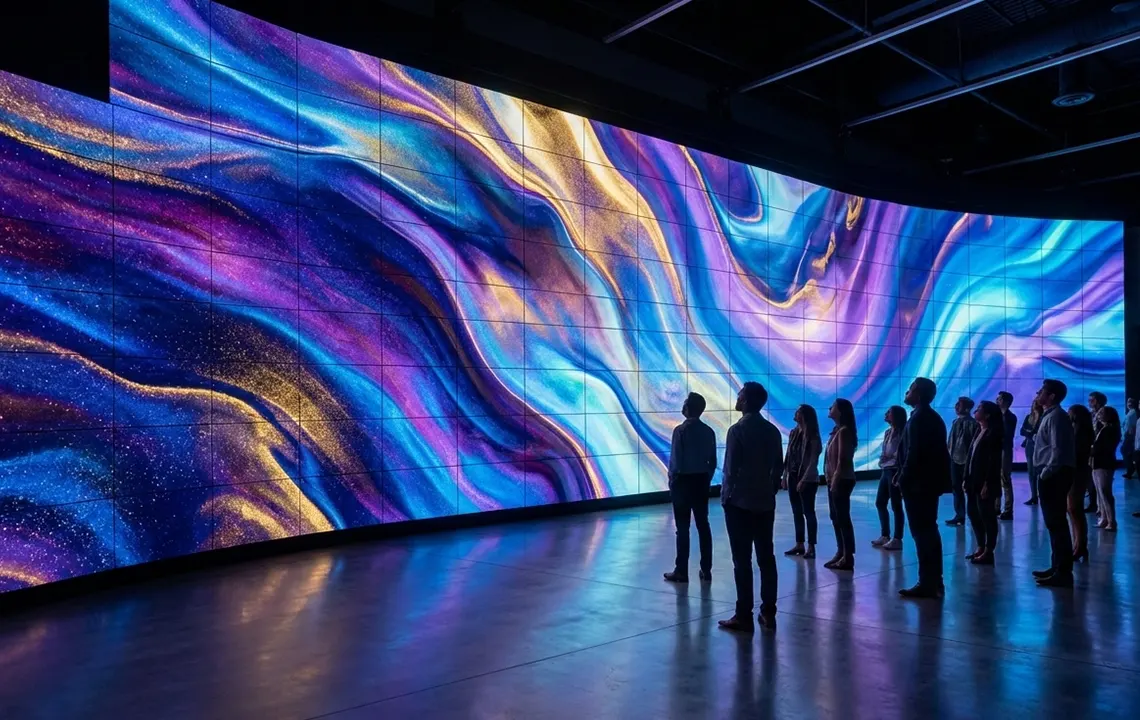
This flexibility fundamentally changes how event designers think about space.
Why LED Screens Are Transforming Event Production
The Shift From Presentation to Experience
Modern audiences are visually sophisticated. They consume high-resolution media daily, and expectations have risen dramatically.
LED technology enables event producers to move beyond slides and static visuals toward immersive storytelling.
Events now rely on LED screens to:
- Create branded environments
- Enhance audience engagement
- Support hybrid communication
- Maintain visual clarity in large venues
- Improve livestream aesthetics
Instead of being a supporting element, the display becomes the centerpiece of the experience.
Reliability Compared to Projection Systems
Projection still has use cases, but LED screens solve many long-standing challenges:
- No ambient light washout
- No shadows from presenters
- Higher brightness levels
- Consistent color reproduction
- Faster setup and calibration
For productions where reliability matters (especially livestreaming and webcasting ) LED systems provide predictable performance.
Major Advantages of New LED Screen Technology
Superior Brightness and Visibility
LED displays perform exceptionally well in environments where lighting conditions cannot be controlled. Bright stages, exhibition halls, and open environments benefit from LED’s ability to maintain image clarity.
This means content remains readable, branding stays sharp, and cameras capture visuals accurately.
Seamless Camera Integration
For livestreaming and hybrid events, screens must work perfectly with cameras.
Modern LED technology reduces flicker, moiré patterns, and refresh conflicts, ensuring professional broadcast quality. This is particularly important when productions combine:
- Live audiences
- Remote viewers
- Real-time streaming platforms
When visuals look great both in person and on camera, the event reaches its full potential.
Creative Freedom for Designers
New LED systems allow production teams to think beyond rectangular screens.
Design possibilities now include:
- LED stage backdrops
- Digital scenic environments
- Interactive walls
- LED floors
- Immersive tunnels and entrances
- Virtual production backgrounds
Creative teams can design experiences instead of merely arranging equipment.
Energy Efficiency and Sustainability
Modern LED technology consumes less energy relative to brightness output compared to older display systems.
This matters for organizations increasingly focused on sustainability goals. Efficient technology reduces power requirements, cooling demands, and logistical complexity.
How LED Technology Supports Livestreaming and Hybrid Events
The New Standard for Hybrid Communication
Hybrid events are no longer temporary solutions, they are permanent components of modern communication strategies.
LED screens improve hybrid productions by enabling:
- Dynamic virtual backgrounds
- Remote speaker integration
- Live data visualization
- Brand consistency across physical and digital audiences
When integrated with professional livestreaming workflows, LED environments transform studios into broadcast-quality experiences.
Visual Consistency Across Platforms
One of the biggest challenges in webcasting is maintaining visual consistency between the live venue and online viewers.
LED screens help unify the experience by ensuring:
- Cameras capture vibrant visuals
- Remote attendees feel included
- Branding remains consistent everywhere
- Presentations look intentional rather than improvised
At Megahertz Productions, we often see clients discover that the visual environment directly influences viewer retention during webcasts.
Why Renting LED Screens Makes Strategic Sense
Access to the Latest Technology Without Ownership Risk
LED technology evolves rapidly. Purchasing equipment can quickly lead to outdated systems.
Renting allows organizations to:
- Use cutting-edge technology immediately
- Scale equipment per event
- Avoid maintenance costs
- Eliminate storage and logistics challenges
- Upgrade easily for future productions
In the AV rental world, flexibility often matters more than ownership.
Scalable Solutions for Any Event Size
Every event has different needs. Renting LED solutions means displays can be tailored precisely:
- Small executive meetings
- Conferences
- Product launches
- Trade shows
- Livestream studios
- Experiential brand activations
Clients gain exactly what they need, no more, no less.
Professional Integration and Support
Technology alone does not guarantee success.
Experienced AV production teams handle:
- Engineering
- Rigging
- Content optimization
- Camera synchronization
- Signal distribution
- On-site technical management
Working with a production partner ensures technology enhances creativity rather than creating stress.
Emerging Trends in LED Display Technology
MicroLED and MiniLED Development
Next-generation LEDs continue shrinking in size while improving brightness and efficiency.
These innovations promise:
- Even higher resolution
- Improved longevity
- Reduced power consumption
- Better color uniformity
As technology matures, audiences will experience increasingly lifelike visuals.
Virtual Production and Extended Reality (XR)
LED volumes ( large LED environments used as digital backgrounds ) are expanding beyond film production into live events and corporate broadcasting.
Benefits include:
- Real-time environments instead of green screens
- Natural lighting reflections
- Faster production timelines
- Greater creative flexibility
- Events are gradually adopting cinematic production techniques previously reserved for studios.
Interactive and Data-Driven Displays
Modern LED systems increasingly integrate with software platforms.
Screens can respond to:
- Audience interaction
- Live analytics
- Social media feeds
- Real-time event data
- Motion tracking
This transforms passive viewing into active participation.
Designing Events Around LED Technology
Rethinking Stage Design
LED technology encourages planners to design visually first.
Instead of asking “Where should the screen go?”, event teams now ask:
“How can visuals shape the audience journey?”
LED displays help define:
- Stage identit
- Brand storytelling
- Emotional impact
- Audience focus
Content Matters More Than Ever
High-quality displays amplify both good and bad content.
Successful LED events invest in:
- Motion graphics
- Cinematic video assets
- Proper resolution formatting
- Dynamic transitions
Production planning must align visuals with storytelling goals.
Collaboration Between Creative and Technical Teams
The most successful productions occur when designers, producers, and technicians collaborate early.
LED technology thrives when creative vision and engineering expertise work together, a philosophy that drives modern AV production workflows.
The Client Perspective: Why Organizations Request Advanced LED Solutions
From our experience working across diverse productions, clients are increasingly asking for advanced LED solutions for several reasons:
- They want events that feel modern and premium.
- They need visuals that work equally well for live and remote audiences.
- They want flexibility without long-term equipment investment.
- They recognize that audience attention is harder to earn than ever.
LED technology helps organizations communicate with clarity, confidence, and visual impact.
Future Outlook
The future of LED screens is not just bigger displays, it’s smarter environments.
We expect continued innovation in:
- Transparent LED surfaces
- Flexible and foldable displays
- AI-driven visual optimization
- Ultra-lightweight panels
- Integrated immersive environments
As these technologies mature, events will feel less like presentations and more like shared digital experiences.
AV production companies will increasingly function as creative technology partners rather than equipment providers.
Choosing the Right LED Solution for Your Event
Key Questions to Consider
Before selecting LED technology, organizations should consider:
- Viewing distance requirements
- Camera integration needs
- Venue lighting conditions
- Content format and resolution
- Audience size
- Livestream or hybrid components
Working with an experienced production partner helps translate these variables into practical solutions.
If you are exploring modern event technology, consulting an AV rental and production team early in the planning process ensures that technology enhances your vision.
Conclusion
New LED screen technology is ultimately about more than pixels and brightness.
It’s about communication.
It’s about creating environments where ideas feel larger, messages resonate deeper, and audiences remain engaged whether they are in the room or watching from across the world.
At Megahertz Productions, we believe technology should disappear into the experience, enabling storytelling, strengthening connection, and helping organizations present their best version to their audience.
As LED innovation continues to evolve, one thing remains clear: events that embrace advanced visual technology are not simply keeping up with industry trends, they are redefining what live communication can become.
And in a world where attention is the most valuable currency, the right visual technology makes all the difference.