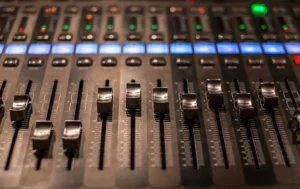
When most people think about audio visual production, they tend to group all live events into one category. Lights, sound, screens, cameras, and a crowd in front of a stage. But anyone working inside the industry knows the reality is far more nuanced.
Corporate events, weddings, and concerts may all use similar equipment, but they do not share the same purpose, audience behavior, or success metrics. Treating them the same way is one of the most common mistakes in event production planning.
At Megahertz Productions, we specialize in AV rental, live production, livestreaming, and webcasting for a wide range of events. Over time, one truth has become extremely clear: corporate AV is a completely different discipline. It requires a structured strategy built around communication clarity, brand alignment, and audience psychology rather than entertainment alone.
In this article, we will break down why corporate AV demands a different approach and how segmentation thinking leads to better outcomes.
Understanding the Core Difference Between Event Types
Before diving into strategy, it is important to understand the fundamental difference in intent between corporate events, weddings, and concerts.
Corporate events are message driven
Corporate events exist to communicate something specific. This could be:
- A product launch
- A shareholder meeting
- A company-wide announcement
- A training session
- A brand presentation
- A hybrid livestream event
The success of the event is measured by how clearly the message is delivered and retained.
Weddings are emotion driven
Weddings are about experience and memory creation. The goal is emotional impact, not structured messaging. Technical AV supports the moment, but it is not responsible for delivering informational clarity.
Concerts are performance driven
Concerts focus on energy, immersion, and audience engagement. The AV experience is part of the artistic expression itself. Sound and lighting design are often intentionally dynamic and expressive.
When you compare these three, it becomes obvious that corporate events stand apart. They are not entertainment-first experiences. They are communication systems.
Audience Behavior Changes Everything in AV Strategy
One of the most overlooked aspects of AV production is audience psychology. Different audiences interact with content in completely different ways depending on context.
Corporate audiences are cognitively engaged
At corporate events, attendees are actively processing information. They are:
- Taking mental or physical notes
- Evaluating decisions or strategies
- Listening for clarity and precision
- Expecting structured content flow
This means AV design must support comprehension, not distraction.
For example, slide readability, speaker audio clarity, and camera framing in livestreams all directly impact understanding. If one of these elements fails, the message fails.
Wedding audiences are emotionally immersed
Guests at weddings are not analyzing content. They are participating in an emotional experience. Small technical imperfections are often unnoticed because attention is not structured around information processing.
Concert audiences are sensory driven
Concert attendees respond to rhythm, sound intensity, lighting shifts, and collective energy. The AV system becomes part of the performance itself rather than a communication tool.
This difference in audience behavior is why corporate AV requires a much more controlled and intentional production strategy.
Messaging Clarity Is the Priority in Corporate AV
In corporate environments, clarity is not optional. It is the foundation of success.
Every technical element supports communication
In corporate AV production, every detail must reinforce the message:
- Audio must be perfectly balanced for speech intelligibility
- Visuals must be clean and readable from any distance
- Transitions must be smooth and non-disruptive
- Camera framing must prioritize speakers and key visuals
At Megahertz Productions, we often say: if the audience remembers the production instead of the message, something went wrong.
Overproduction can reduce impact
One of the biggest mistakes in corporate AV is over-designing the experience. Flashy lighting or overly dynamic visuals may work in concerts, but in corporate settings they can dilute focus.
The goal is not to impress the audience visually. The goal is to ensure they understand and retain what is being said.
Branding Needs Are Significantly More Strict in Corporate Events
Brand consistency is another area where corporate AV diverges heavily from weddings and concerts.
Corporate events are brand extensions
A corporate event is not just a gathering. It is a physical or virtual extension of a company’s identity. That means:
- Colors must align with brand guidelines
- Typography in visuals must remain consistent
- Video transitions must reflect brand tone
- Stage design must reinforce corporate identity
Everything communicates something about the brand, whether intentional or not.
Weddings and concerts allow creative freedom
In contrast, weddings are personalized and emotional, and concerts are artist-driven. Branding is either minimal or centered on entertainment identity rather than corporate consistency.
Why segmentation matters
This is where segmentation strategy becomes essential. AV design cannot be one-size-fits-all. Corporate AV requires:
- Structured branding systems
- Controlled visual identity
- Consistent messaging hierarchy
At Megahertz Productions, we often build AV workflows specifically around brand compliance requirements before any creative decisions are made.
The Role of Livestreaming and Webcasting in Corporate AV
Modern corporate events are no longer limited to physical attendees. Livestreaming and webcasting have become core components of communication strategy.
Corporate livestreams require broadcast-level precision
Unlike casual streaming, corporate livestreams must ensure:
- Zero audio dropouts
- Stable multi-camera switching
- Clean graphic overlays
- Real-time synchronization between presenters and visuals
This is not just technical execution. It is reputation management.
A poorly executed livestream can damage credibility far more than a minor issue in a live concert setting.
Weddings and concerts use livestreaming differently
While weddings may include streaming for remote guests, and concerts may use streaming for reach, corporate events rely on it as a primary communication channel.
This means redundancy, signal stability, and production control become top priorities.
Why Segmentation Thinking Improves AV Production Quality
The key to successful AV strategy is segmentation. Treating all events under one production philosophy leads to misaligned outcomes.
Segment 1: Corporate communication events
These include:
- Conferences
- Internal meetings
- Product launches
- Hybrid corporate presentations
Focus: clarity, structure, brand alignment
Segment 2: Social emotional events
These include:
- Weddings
- Private celebrations
- Anniversaries
Focus: emotion, atmosphere, memory creation
Segment 3: Entertainment performance events
These include:
- Concerts
- Festivals
- Live shows
Focus: immersion, energy, sensory experience
Each segment requires a different AV philosophy, not just different equipment.
The Megahertz Productions Approach to Corporate AV
At Megahertz Productions, we design corporate AV systems with one primary principle: communication must never be compromised by production complexity.
Pre-production planning comes first
We begin with understanding:
- The message hierarchy
- Speaker flow and timing
- Audience structure (in-person and remote)
- Brand guidelines
Technical design supports communication
Only after understanding the content do we design:
- Audio routing and reinforcement
- Camera placement and switching logic
- Screen layouts and content delivery systems
- Streaming architecture for hybrid audiences
Real-time control ensures consistency
During execution, our focus is:
- Maintaining clarity in every transition
- Ensuring speaker visibility at all times
- Avoiding unnecessary visual noise
- Keeping broadcast stability for livestream audiences
This structured approach is what differentiates corporate AV from other event categories.
Common Mistakes When Applying the Wrong AV Strategy
Many production issues occur when corporate events are treated like entertainment events.
Mistake 1: Overusing visual effects
What works in concerts often reduces clarity in corporate settings.
Mistake 2: Ignoring audience segmentation
On-site and remote audiences require different visual and audio priorities.
Mistake 3: Weak content-AV alignment
Even the best technical setup fails if it is not aligned with the speaker’s message structure.
Mistake 4: Treating livestreaming as secondary
In corporate events, livestreaming is often the primary audience channel, not an add-on.
Why Strategy Matters More Than Equipment
It is easy to assume that high-end equipment is the key to great AV production. In reality, strategy matters more than tools.
Two events can use identical equipment but deliver completely different outcomes based on:
- Planning quality
- Audience understanding
- Messaging clarity
- Production discipline
This is why segmentation thinking is essential for corporate AV success.
Final Thoughts
Corporate events, weddings, and concerts may share the same stage, but they do not share the same purpose. Corporate AV is fundamentally about communication, precision, and brand alignment. Weddings are about emotion. Concerts are about performance.
When AV strategy is aligned with event type, everything improves. Message clarity increases, audience engagement becomes more meaningful, and production quality feels intentional rather than reactive.
At Megahertz Productions, we specialize in building AV systems that respect these differences. Whether it is AV rental, live production, livestreaming, or webcasting, our focus is always the same: delivering the right message to the right audience with absolute clarity.