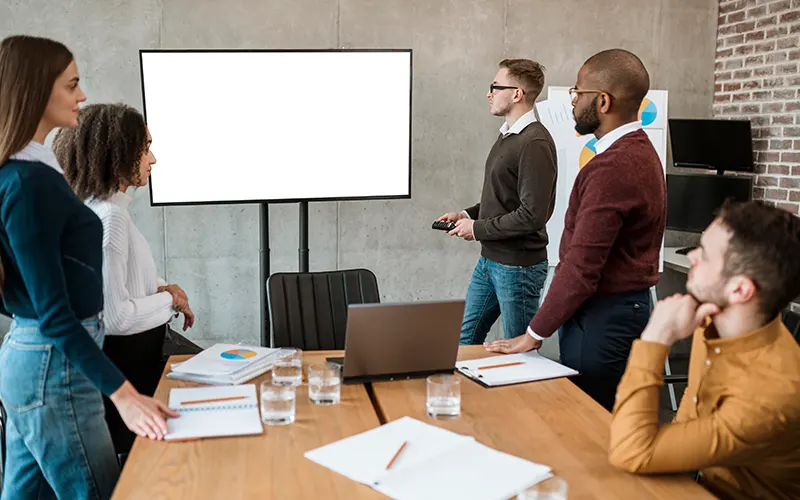
In a world filled with LED walls and high-end digital displays, projectors and screens remain one of the most flexible, cost-effective, and visually impactful solutions for events of all sizes. As an AV rental and production company, we’ve seen firsthand how a well-planned projection setup can transform everything from corporate conferences and product launches to hybrid webinars and immersive live experiences.
Projection offers scalability. You can adapt screen size, brightness, and aspect ratio to fit a small meeting room or a massive stage without committing to permanent installations. It also integrates seamlessly with livestreaming and webcasting setups, allowing presentations, live feeds, and multimedia content to work together smoothly.
Whether you’re planning a keynote presentation, a training session, or a high-energy production, understanding the fundamentals of projector and screen rentals will help you avoid common mistakes and get the most value from your AV investment.
Understanding Different Types of Projectors
Choosing the right projector is more than just picking a brightness level. The technology and configuration directly influence image quality, setup flexibility, and overall event success.
Standard Presentation Projectors
These projectors are ideal for business meetings, educational sessions, and conferences. They’re designed to deliver clear slides, charts, and videos in moderately lit environments.
Key advantages include portability, easy setup, and cost efficiency. They work best for events where content clarity matters more than cinematic visuals.
High-Brightness Event Projectors
For large venues or environments with strong ambient lighting, high-brightness projectors are essential. These models deliver powerful output that keeps visuals crisp and vibrant even when lights are on or audiences are far from the screen.
High-brightness projectors are commonly used for:
- General sessions
- Large conferences
- Trade shows
- Outdoor presentations
If your event involves a large audience or wide viewing angles, these projectors help maintain image quality without forcing a darkened room.
Laser Projectors vs. Lamp-Based Projectors
Laser projectors have gained popularity because of their reliability and consistent brightness. They warm up faster, require less maintenance, and maintain color accuracy over long periods.
Lamp-based projectors are still widely used for smaller productions and short-term rentals. They can be a cost-effective choice when ultra-high brightness or extended run times are not required.
Ultra-Short Throw and Short Throw Projectors
In tight spaces or rooms where projector placement is limited, short-throw and ultra-short-throw projectors allow you to create large images from a short distance. This reduces shadows and improves audience engagement because presenters can stand closer to the screen without blocking the image.
Choosing the Right Projection Screen
The screen is just as important as the projector. Even the best projector will look mediocre if paired with the wrong screen type or size.
Portable Projection Screens
Portable screens are perfect for small to mid-sized events. They’re easy to assemble, lightweight, and adaptable to different room layouts.
Use cases include:
- Training rooms
- Workshops
- Small conferences
- Community events
Fast-Fold and Large Venue Screens
For larger productions, fast-fold or modular screens provide a professional appearance and scalability. These screens are commonly used for stages, large conferences, and corporate presentations where visual impact is essential.
They’re also ideal for hybrid events where content must be visible both to in-person audiences and remote viewers.
Rear Projection Screens
Rear projection allows the projector to be placed behind the screen, creating a clean front-of-house look without cables or equipment visible to attendees.
This setup is particularly useful for:
- Stage productions
- Corporate events with clean aesthetics
- Broadcast-style presentations
- Events with heavy foot traffic near the stage
Aspect Ratios and Screen Formats
Choosing the correct aspect ratio ensures your content displays without distortion or black bars.
Common formats include:
- 16:9 for modern presentations and video content
- 4:3 for legacy slide decks
- Ultra-wide formats for immersive experiences
Before renting, confirm your presentation format so the screen matches your content perfectly.
How to Calculate Projector Brightness and Screen Size
One of the most frequent challenges we encounter is mismatched brightness and screen dimensions. A massive screen with insufficient brightness leads to washed-out visuals, while an overly bright projector in a small space can strain viewers’ eyes.
Key Factors Affecting Brightness Requirements
- Room lighting conditions
- Screen size
- Audience distance
- Content type (text vs. video vs. graphics)
As a general rule, brighter environments require higher lumens. Outdoor daytime events or large conference halls need significantly more brightness than a dimly lit meeting room.
Determining Screen Size
Screen size depends on audience size and seating arrangement. A common guideline is that the furthest viewer should be able to read small text comfortably without straining.
Consider:
- Viewing distance
- Room dimensions
- Stage height
- Camera framing for livestreaming or webcasting
Essential Accessories That Improve Projection Quality
Many people focus only on projectors and screens, but accessories can make or break the experience.
Signal Distribution and Switchers
When multiple presenters or video sources are involved, professional signal management ensures seamless transitions between laptops, cameras, and media players.
Rigging and Staging Support
Proper mounting and rigging enhance safety and maintain professional aesthetics. Secure setups prevent movement, vibration, and accidental damage.
Confidence Monitors and Presenter Tools
Confidence monitors allow speakers to see their content without turning around. Remote clickers, timers, and preview displays help maintain a smooth flow during presentations.
Integrating Projectors into Livestreaming and Hybrid Events
Projection is no longer just about in-room audiences. Modern events often include remote participants through livestreaming or webcasting.
Dual-Audience Content Strategy
Content should be optimized for both the screen and online viewers. This may involve:
- Adjusting font sizes
- Balancing color contrast
- Designing layouts that look good on camera
Camera Positioning Around Screens
Camera angles must avoid glare and maintain clear visuals. Rear projection setups often simplify this process because cameras capture clean images without shadows.
Synchronizing Presentation Feeds
Professional AV teams use dedicated systems to synchronize projector outputs with streaming platforms. This ensures remote viewers see exactly what in-room audiences experience.
Common Mistakes to Avoid When Renting Projectors and Screens
Even experienced event planners occasionally run into projection challenges. Here are a few pitfalls we frequently help clients avoid.
Underestimating Room Lighting
Ambient lighting dramatically affects image visibility. Always consider lighting conditions when selecting brightness levels.
Ignoring Throw Distance
Every projector has specific distance requirements to achieve the desired image size. Failing to account for this can lead to awkward placement or incomplete screen coverage.
Overlooking Content Format
Different devices output different resolutions and aspect ratios. Confirm compatibility before the event day.
Skipping Technical Rehearsals
A full rehearsal allows presenters to test slides, transitions, and media playback while technicians verify signal stability and screen alignment.
Tips for a Smooth Projector and Screen Rental Experience
Working with an experienced AV partner can simplify planning and execution. Here’s how to make the most of your rental.
Share Event Details Early
Provide:
- Venue dimensions
- Audience size
- Content format
- Lighting conditions
- Production goals
The more information your AV team has, the better they can recommend the right equipment.
Request On-Site Support
Technical staff can handle setup, troubleshooting, and adjustments during the event, allowing your team to focus on content and audience engagement.
Plan for Redundancy
Backup equipment and alternative signal paths help prevent unexpected interruptions.
Recommended Equipment Categories for Different Event Types
Different events require different projection solutions.
Corporate Presentations
- Mid-range brightness projectors
- Portable or fast-fold screens
- Confidence monitors
- Presentation switchers
Conferences and Large Events
- High-brightness laser projectors
- Large venue screens
- Rigging solutions
- Multi-source video switching
Hybrid and Livestreamed Events
- Rear projection setups
- Camera-friendly screens
- Integrated streaming systems
- Dedicated content monitoring displays
Exploring Projector and Screen Options from Megahertz Productions
At Megahertz Productions, we specialize in delivering reliable projection solutions tailored to diverse production needs. Our inventory includes a wide range of professional projectors designed for clarity, flexibility, and seamless integration with modern event technology.
You can explore available projector models through:
https://www.mhzav.com/product-category/projectors-screens/projectors/
For different screen sizes and configurations suited to various event environments, check:
https://www.mhzav.com/product-category/projectors-screens/screens/
These pages can be naturally referenced within your internal linking strategy to help visitors discover the right equipment options based on their event goals.
Final Thoughts
Projectors and screens remain foundational tools in the AV world because they combine flexibility, scalability, and cost efficiency. When planned correctly, they elevate presentations, enhance audience engagement, and integrate seamlessly with modern production workflows.
The key is understanding how projector technology, screen selection, room conditions, and content design all work together. Partnering with an experienced AV rental and production team ensures that every detail, from brightness calculations to signal management, is handled professionally.
Whether you’re hosting a small corporate meeting or producing a large hybrid conference, a thoughtful projector and screen rental strategy can make your visuals more impactful and your event more memorable. By choosing the right equipment, planning for technical details, and integrating projection with livestreaming and webcasting workflows, you’ll create an experience that looks polished both in person and online.
And when your production requires dependable equipment and expert support, Megahertz Productions is ready to help bring your vision to life with professional AV solutions designed for modern events.